
Mr. Ramage joined IRI’s London office in March 2002 and was appointed Managing Director in January 2003. He was instrumental in the establishment of offices in Hamburg (2007), Roosendaal (2008), Mumbai (2008), and Dubai (2009) where he continues to have a management role. In 2009 Mr. Ramage accepted the title of Director, Worldwide Business Operations whereby he was responsible for IRI’s global network of offices. A resident of the
United Kingdom, Mr. Ramage was appointed Chief Operating Officer (COO) of IRI in April of 2011 and continues to be responsible for operations of all worldwide offices, including IRI’s headquarters in Washington, DC/Reston. Mr. Ramage has an extensive background at sea having sailed with BP Tankers, Mobil Shipping, and Maersk Line. He spent 14 years in the ship management industry, predominantly in Hong Kong with Denholm Ship Management and Eurasia Ship Management where he rose to Vice President, managing a fleet of 50 vessels. Mr. Ramage holds a Master Mariners Certificate and a Master of Business Administration from the University of Edinburgh as well as a Bachelor of Science Honours in Nautical Studies from Liverpool Polytechnic.
Gulf Navigation signs Sharjah ...
Gulf Navigation signs...
Dubai-based Gulf Navigation Holding has signed a three-month agreement with an as yet unnamed gas co...
Dubai-based Gulf Navigation Holdi...

Al Seer Marine commences work ...
Al Seer Marine commen...
Abu Dhabi-based Al Seer Marine (ASM), a subsidiary of International Holding Company (IHC), recently ...
Abu Dhabi-based Al Seer Marine (A...
India’s first FSRU arrives in ...
India’s first FSRU ...
Höegh Giant, India’s first Floating Storage and Regasification Unit (FSRU), arrived at H-Energy’s Ja...
Höegh Giant, India’s first Fl...
Floating storage unit conversi...
Floating storage unit...
ADNOC Logistics & Services (ADNOC L&S) and Atlantic Gulf & Pacific International Holding...
ADNOC Logistics & Services (A...
Nakilat’s latest dual fuel LNG...
Nakilat’s latest du...
Doha-based shipping group Nakilat has taken delivery of a newbuild LNG carrier, Global Sealine, whic...
Doha-based shipping group Nakil...
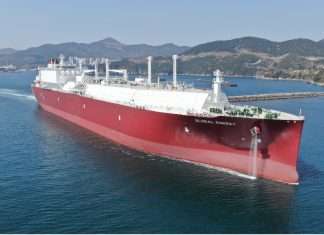
Nakilat and ABS collaborate on...
Nakilat and ABS colla...
Doha-based Nakilat, one of the world’s largest LNG shipping operators, is partnering with ABS to dev...
Doha-based Nakilat, one of the wo...
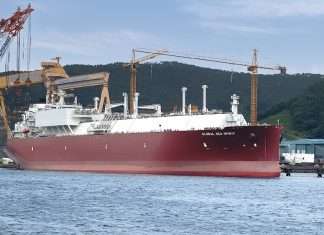
Nakilat takes delivery of thir...
Nakilat takes deliver...
Doha-based Nakilat has taken delivery of a newbuild LNG carrier, Global Sea Spirit, which will be co...
Doha-based Nakilat has taken deli...

First North Field expansion LN...
First North Field exp...
Qatar Petroleum, now renamed Qatar Energy, has ordered four new LNG carriers from Hudong-Zhonghua Sh...
Qatar Petroleum, now renamed Qata...

Partners to deliver gas carrie...
Partners to deliver g...
Lloyd’s Register (LR), Korea Shipbuilding & Offshore Engineering (KSOE) and Hyundai Heavy Indust...
Lloyd’s Register (LR), Korea Sh...

Prostar plans to link FOT to V...
Prostar plans to link...
Prostar Capital has completed a major refinancing exercise for the Fujairah Oil Terminal (FOT), secu...
Prostar Capital has completed a m...

Agreements signed for Kakinada...
Agreements signed for...
Crown LNG, a Norwegian group which specialises in developing LNG infrastructure for harsh weather co...
Crown LNG, a Norwegian group whic...
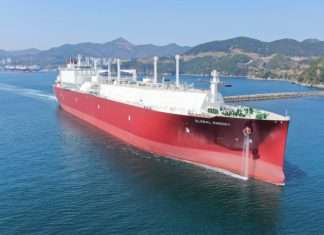
Nakilat increases profitabilit...
Nakilat increases pro...
Doha-based Nakilat has announced financial results for the first quarter ending March 31st 2021 whic...
Doha-based Nakilat has announced ...
Frequently Asked Questions
“Clean fuel for ships” refers to marine fuels that produce lower emissions compared to traditional heavy fuel oil. These include LNG, low-sulphur marine fuels, methanol, biofuels and emerging alternatives like hydrogen and ammonia. In the oil and gas sector, clean fuel for ships supports compliance with environmental regulations while helping reduce the carbon footprint of maritime operations.
The shift toward clean fuel for ships is important because it helps reduce air pollution, greenhouse gas emissions and environmental impact from shipping. Stricter IMO regulations and growing sustainability goals are pushing shipowners and operators to adopt cleaner fuels, improving air quality near ports and supporting long-term environmental responsibility.
The oil and gas industry supports clean fuel for ships by investing in alternative fuel production, LNG bunkering infrastructure, biofuel development and research into hydrogen and ammonia. Energy companies are also working with ports and shipping lines to expand fuel supply networks and ensure reliable access to cleaner marine fuels worldwide.
Challenges in adopting clean fuel for ships include high infrastructure costs, limited fuel availability at some ports, vessel retrofit expenses, and uncertainty around future fuel standards. Despite these challenges, ongoing innovation and investment in the oil and gas sector are helping accelerate the transition to cleaner maritime fuels.
Reliable news about clean fuel for ships and maritime energy developments can be found on trusted maritime news platforms like The Maritime Standard, along with energy industry reports, port authority announcements and IMO updates. These sources provide insights into fuel technology trends, regulatory changes and investment activities shaping the future of clean shipping.