Print
Print
 PDF
PDF
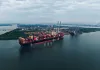
Completed within just three months, a new 8.5 km access channel now directly links Egypt’s East Port Said port complex to the Mediterranean Sea, eliminating the need for vessels heading to the Suez Canal Container Terminal (SCCT) to wait 6-8 hours for a time window between vessel convoys transiting the canal. This means that the channel, dredged to a depth of 18.5m, can provide 24 hour access to East Port Said, and SCCT, to containerships of 18,000 teu capacity and above now deployed in the Far East/Europe trade lanes, and using the canal in increasing numbers.
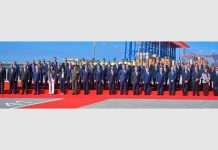
A ceremony formally inaugurating the project was hosted by SCCT at East Port Said. Attendees at the ceremony included Egyptian Prime Minister Sherif Ismail, Suez Canal Authority Chairman, Admiral Mohab Mamish, and the Governor of Port Said, Major General Adel El Ghadban. They were able to witness the opening of the project, which represents an investment of approximately US $40 million.
APM Terminals is the majority shareholder in SCCT, with a 55% ownership. Other shareholders include Chinese-based COSCO Pacific, with 20%, the Suez Canal Authority, with 10.3%, and the National Bank of Egypt, with 5%. The remaining shares are held by the Egyptian private sector. Over US $800 million has been invested in the terminal, which opened in October 2004, and has become one of the busiest container facilities in the region, handling 2.95 million teus, primarily for transshipment, in 2015.
SCCT is currently undergoing expansion, including the installation of new generation ship-to-shore cranes to accommodate increased vessel traffic, and larger container ships. The four additional super-post-panamax cranes scheduled for delivery to the terminal in mid-2016 will take SCCT’s crane total to 24. The US$ 42 million investment will increase the terminal’s annual throughput capacity to 5.4 million teu, and make it the largest container terminal in terms of capacity within the Mediterranean. The new STS cranes will each have a 72m outreach, and a height of 52m, giving them the ability to handle the world’s largest vessels.
As well as investing in container terminal facilities, SCCT is also exploring further diversification into dry port facilities and other activities. This includes general and liquid bulk terminal operations.