Print
Print
 PDF
PDF
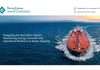
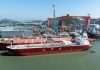
Saudi Arabia-based shipping company Bahri has ordered a series of ten 49,999 dwt medium range (MR) type chemical tankers from Hyundai Mipo Dockyard (HMD) in South Korea, for a total cost of around US$ 410 million. The first of the new tankers, which will be built to high environmental, safety and fuel efficiency standards, are scheduled for delivery in the first quarter of 2022.
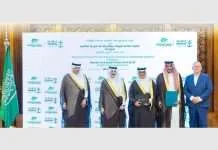
Bahri Chief Executive, Abdullah Aldubaikhi, said: “The new agreement with HMD for the building of 10 high-spec chemical tankers represents a major step forward in our next phase of growth and further strengthens our leading position in the global maritime industry. With the newbuilds entering our fleet over the next two years, we will be further equipped to cater to the varying needs of our customers around the world.”
The contract continues the close working relationship between Bahri and HMD. With the delivery of the latest chemical carriers the South Korean yard will have built 61 tankers of varying types for the Saudi carrier.
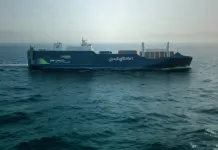
In May this year, Bahri took delivery of a new dry bulk carrier, Sara, one of four sister ships ordered from HMD. In addition, Bahri is also expecting a new VLCC, which is currently being built by International Maritime Industries (IMI), and will be delivered by October 2021.
Currently Bahri operates a fleet of 87 vessels, including 41 VLCCs, 34 chemical and product tankers, 6 multipurpose ro-ro vessels and six dry bulk carriers. Adding in the vessels on order, the company will see the number of ships in its fleet rise to 101 by the end of 2022.
Bahri has also recently become a partner in the National Grain Company, a new venture with Saudi Agricultural and Livestock Investment Company (SALIC). The partners aim to oversee the trade, handling, and storage of grains moving between the Black Sea, Europe and South America and the Red Sea region, offering import, transportation, distribution, and storage services.
A new terminal for grain and fodder handling will be developed at Yanbu Commercial Port on the Saudi Red Sea coast. It will start with a capacity of about 3 million tons per year in 2022, and gradually increase to 5 million tons per year thereafter. The new facility, it is claimed, will be the largest regional centre for grain handling.