Print
Print
 PDF
PDF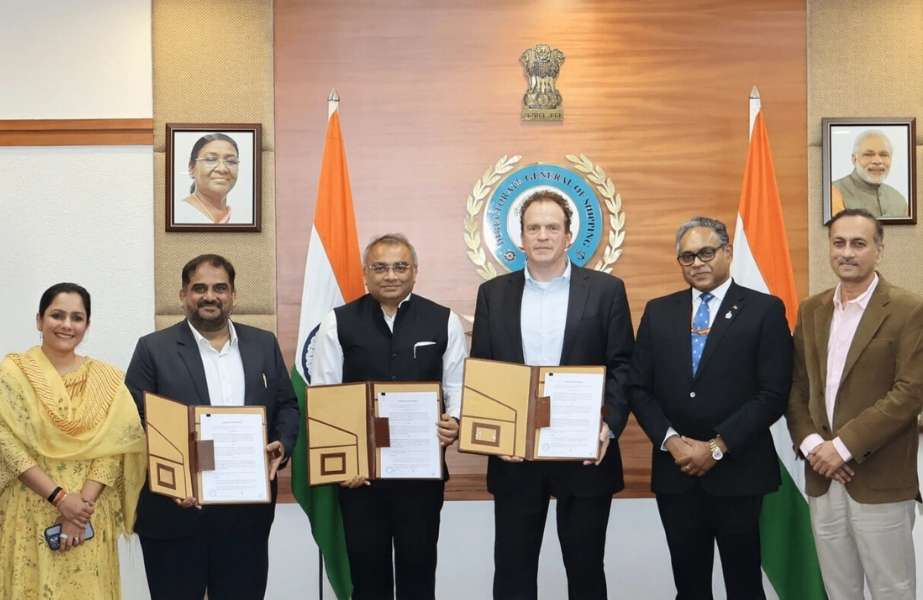
APSEZ launches India’s first Port of Refuge
Adani Ports and Special Economic Zone (APSEZ) have put into operation India’s first Port of Refuge (PoR), addressing what is considered to be a long-standing gap in the country’s maritime emergency infrastructure. The initiative creates a better structure to handle maritime emergencies and vessels in distress.
A PoR, as defined by the International Maritime Organization (IMO), is a designated location where ships can seek shelter to stabilise conditions, protect life and limit environmental damage. While such frameworks are standard in major maritime economies, India has not formally had one until now.
APSEZ will in fact designate two sites as PoRs – Dighi Port on the west coast, supporting traffic across the Arabian Sea and routes to the Persian Gulf, and Gopalpur Port on the east coast, serving vessels in the Bay of Bengal and routes towards the Malacca Strait, one of the world’s busiest maritime trade corridors. The facilities will provide salvage and wreck removal, firefighting, pollution containment and emergency coordination services through the deployment of specialised equipment and trained response teams.
The initiative, backed by a tripartite memorandum of Understanding (MoU) between APSEZ, SMIT Salvage and the Marine Emergency Response Centre (MERC), has been welcomed by the Indian Government. According to Shri Shyam Jagannathan, Director General of Shipping, “The initiative marks an important step in strengthening India’s maritime preparedness and emergency response capacity. The adoption of a standardised Port of Refuge framework will enable more coordinated and timely action during maritime incidents, ensuring effective protection of life, cargo, and the coastal environment.”
Another APSEZ-backed initiative, the new Haldia Bulk Terminal (HBT), has recently been officially commissioned. Designed to handle dry bulk cargo, including coal traffic, with an annual capacity of 4 million tonnes, the terminal is a fully automated facility with direct rail connections and is located within the Haldia Dock Complex (HDC).
As part of a major investment programme, APSEZ has installed a 2000 tonnes capacity Railway Wagon Loading System (RWLS) and commissioned a 1.54 km dedicated railway line, enabling direct ship-to-train cargo movements. It has also refurbished the existing jetty; installed advanced conveyor systems; deployed two bulk stacker-reclaimers and added two mobile harbour cranes.
The RWLS and the dedicated rail line are considered by APZEZ to be the terminal’s most consequential features. Together they allow bulk cargo discharged from vessels to be loader directly onto railway wagons, reducing port dwell time, and cutting the delivered cost of raw materials for industrial consumers.
Also Read: Dighi Port To Become Key Automotive Hub