Print
 PDF

Bahri places SAR 1.69 billion VLCC order with Saudi shipyard IMI
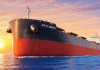
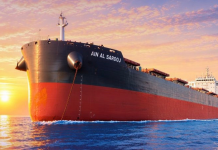
One of the leading shipping companies in the Middle East, Bahri, has entered into an agreement with International Maritime Industries (IMI) for the construction of three Very Large Crude Carriers (VLCCs) at the latter’s shipyard facility in Saudi Arabia.
Under the terms of the contract, valued at approximately SAR 1.692 billion, IMI will build three 320,000 dwt VLCCs, each equipped with advanced energy efficiency technologies, and these are scheduled for phased delivery between 2029 and 2030.
The latest order is part of Bahri’s ongoing strategy to modernise its fleet and expand its operational capabilities. The total number of vessels Bahri has contracted to be built in Saudi Arabia since the beginning of the year is now nine, including six Ultramax bulk carriers and three VLCCs.
Bahri recently announced impressive financial results for the third quarter and first nine months of 2026, reporting net profits of US $ 5.09 billion and US $ 9.98 billion, respectively. Eng. Ahmed Ali Al Subaey, Chief Executive Officer of Bahri, commented: “Bahri delivered another strong quarter, in an exceptionally complex operating environment. As trade flows shifted and customer requirements evolved, we adapted quickly while maintaining the reliable movement of essential cargo across the Kingdom and global markets.”
In the third quarter of this year, Bahri recorded an astonishing level of revenue growth of 504 % year-on-year. This was driven primarily by the operations of Bahri Oil, as the company benefited from significantly higher VLCC freight rates, primarily due to continued regional shipping disruptions. Over the first 9 months of the year Bahri generated revenues of US $ 26.10 billion, up 268% year-on-year, while profitability on an EBITDA basis increased by 240% $ 12.0 7 billion.
During the third quarter of 2026, Bahri entered the LPG and ammonia shipping segment through the acquisition of three second-hand medium-sized gas carriers, expanding its shipping operations in response to growing export demand from Saudi customers. The first vessel was delivered in September, while the remaining two vessels are expected to be delivered in the fourth quarter of 2026 and the first quarter of 2027 respectively.