Print
Print
 PDF
PDF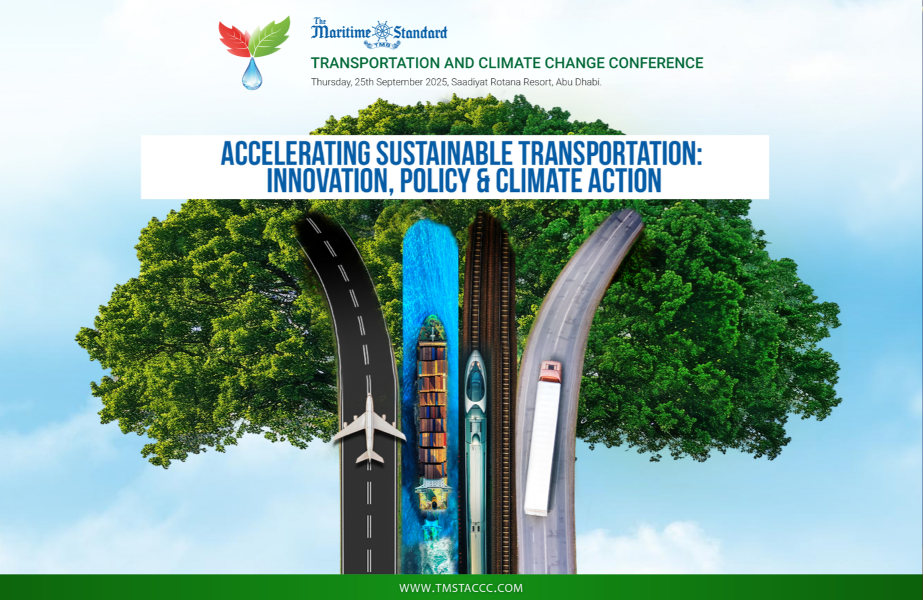
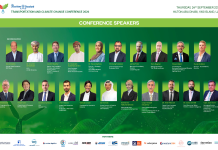
The Maritime Standard has announced the first session of the upcoming Transportation & Climate Change Conference (TMS TACCC 2025), which will take place on Thursday, 25th September 2025 at the Saadiyat Rotana Resort, Abu Dhabi. Held under the overarching theme “Accelerating Sustainable Transportation: Innovation, Policy & Climate Action,” the event will bring together senior leaders from the maritime, logistics, aviation, and transportation industries to address the path toward net-zero emissions.
Session 1, titled “Net-Zero Maritime Transport – Policy, Investment & Global Roadmap,” will explore the policy frameworks, financial tools, and technological innovations shaping the decarbonization journey of the maritime sector.
This opening session will delve into the latest regulatory developments from the International Maritime Organization (IMO MEPC), the European Union Emissions Trading System (EU ETS) expansion into shipping, and the broader UNFCCC climate agenda. Experts will discuss how aligning corporate strategies with these regulations is critical to achieving sector-wide transformation.
Among the key themes, the session will explore carbon pricing and green taxation—examining their economic impact on global trade and the preparedness of shipping stakeholders for emerging carbon markets and maritime emissions trading schemes. These discussions will sit alongside a broader analysis of regulatory alignment, investment pathways, and technological innovation driving the sector’s transition to net-zero.
The session will also spotlight financing mechanisms essential for the energy transition. Topics will include green bonds, climate finance instruments, and innovative public-private partnership (PPP) models aimed at building clean shipping corridors, modern green ports, and fueling infrastructure for low- and zero-emission vessels.
In parallel, the integration of artificial intelligence and digital innovation into maritime logistics will be discussed, including the role of AI in emissions forecasting, smart vessel routing, and port energy optimization—laying the foundation for a more sustainable and efficient global shipping network.
Geopolitical implications and the role of global governance in advancing maritime climate action will also be examined, as panelists consider how climate and trade regulations are impacting maritime security and cross-border supply chains.
Finally, the session will offer insights into regional progress toward multi-modal, low-carbon logistics corridors that combine shipping with electrified rail and road transport—highlighting infrastructure strategies that enable fully decarbonized trade networks.
TMS TACCC 2025’s first session promises to be a strategic knowledge platform for regulators, investors, and operators working to accelerate the decarbonization of maritime transport.