Print
Print
 PDF
PDF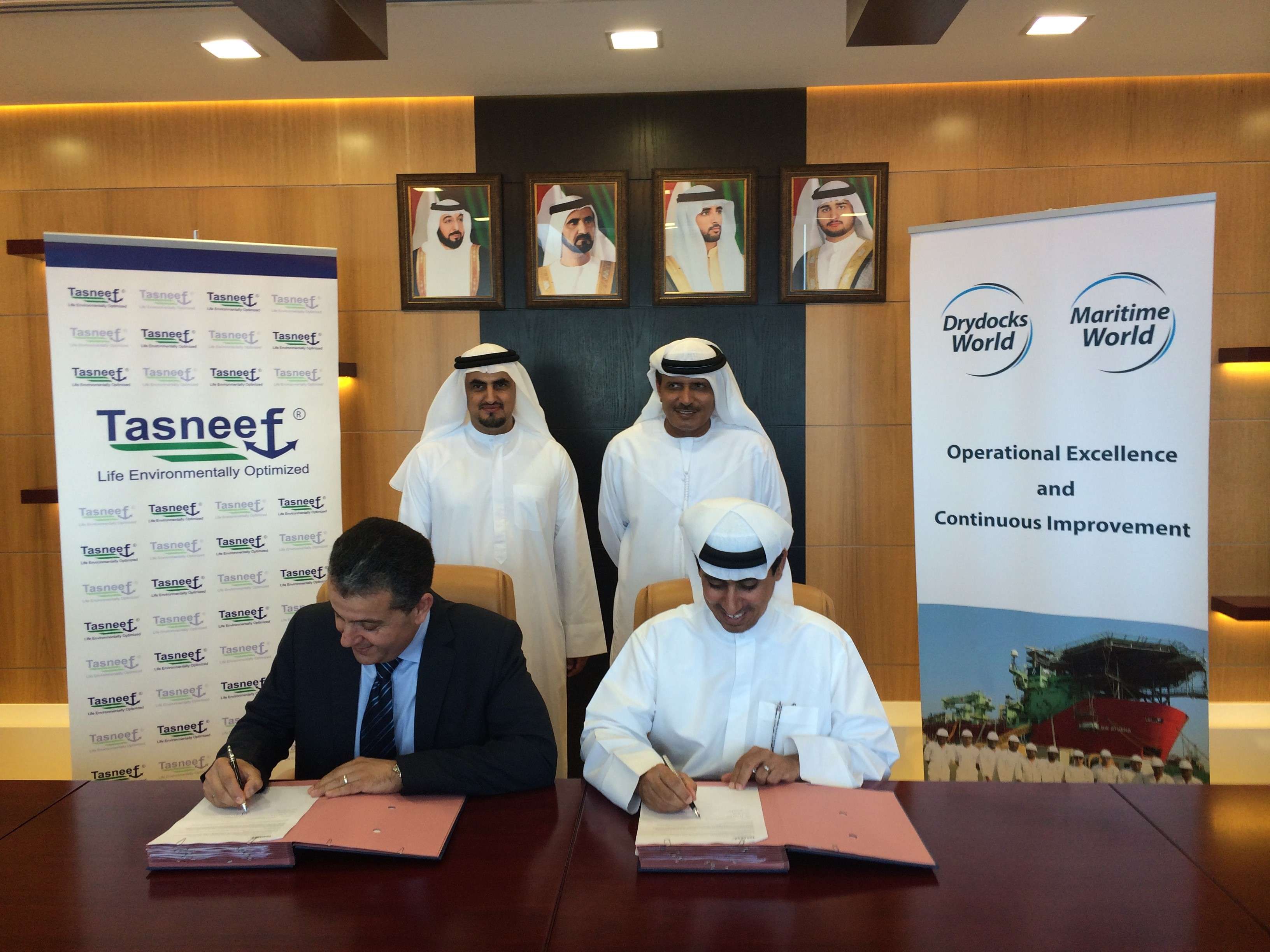
The Emirates Classification Society, Tasneef, is making much faster progress than originally envisaged, says Omar Abu Omar, chief operating officer. Speaking to The Maritime Standard at SMM, Omar highlighted the fact that new rules for domestic ships not covered by international conventions came into force on September 1st this year, and that Tasneef surveyors were now ensuring compliance with the new rules in UAE waters.
Developed by Tasneef, the rules have been adopted by other GCC countries and are now known as the GCC Code. Essentially they comprise a set of safety regulations for cargo ships not covered by the provisions of IMO Conventions and for small passenger vessels carrying less than 200 passengers,Omar says, “The new GCC Code will enhance the safety of vessels operating in domestic waters within the UAE, as well as other GCC countries, and will help protect shipping personnel, the environment and shipping assets. The UAE has taken the lead on this issue, and the GCC Code has been warmly welcomed by the shipping industry, which now has a standard to apply for local condition surveys.”
There have been a number of other key milestones reached by Tasneef recently. The Abu Dhabi-based classification society has just signed a Memorandum of Understanding with Drydocks World and Dubai Maritime City (DMC) to provide classification services to an LNG-powered harbour tug that will be built in Dubai. The design, steel cut, installation, and then the fitting-out supervision of the tug, named Elemarateyah, will be carried out to Tasneef technical rules, while Tasneef surveyors will continue to carry out periodic inspections of the vessel once it is operational. Both Tasneef and Drydocks World will work closely with Wartsila, which will develop the LNG-powered propulsion unit for the new tug, on this project.
Tasneef has also developed the so-called Sahara Rules, which can be applied to vessels that will operate only in Gulf waters. The first ships are now being built to these Rules, in Romania and Australia, under Tasneef supervision. Omar explains, “There are particular conditions, including high temperatures, humidity and water salinity levels which apply in the Gulf and which mean that if a ship is to be operated only in the Gulf it can be built to different specifications. For example it can be made lighter, with about 15% less steel, and so can operate more fuel efficiently.”
Tasneef has tailored the new Sahara Rules to the specific needs of operators in the Gulf. “If a vessel is not going to operate outside the Gulf, why set Rules that will effective impose penalties on the owner?” asks Omar.
Although Tasneef was set up less than 3 years ago, it has already got over 50 ships under class, with Drydocks World recently agreeing to transfer 11 vessels over to Tasneef, following on from a similar decision taken by Abu Dhabi Ports Company earlier in the year.
Tasneef has also built up a core of UAE nationals within its surveying team, and around 50% of its surveyors are in fact local professionals. “I believe we are the only classification society that has locally qualified UAE nationals as surveyors,” says Omar. “At Tasneef we are determined to attract, educate, train and qualify young Emiratis in the fields of mechanical, electrical and maritime engineering.” Omar also points to the success of the Tasneef advisory board, which includes several leading public and private sector figures. This board meets regularly to discuss challenges facing the maritime industry in the UAE and to propose solutions.
Tasneef currently has its main office in Abu Dhabi and is in the process of setting up another office in Dubai. In addition it has site offices at shipyards in Romania and Australia supervising new build projects.
Omar adds, “We didn’t expect to see this level of growth and progress. It shows there is a need and support for a locally based classification society.”