Print
Print
 PDF
PDF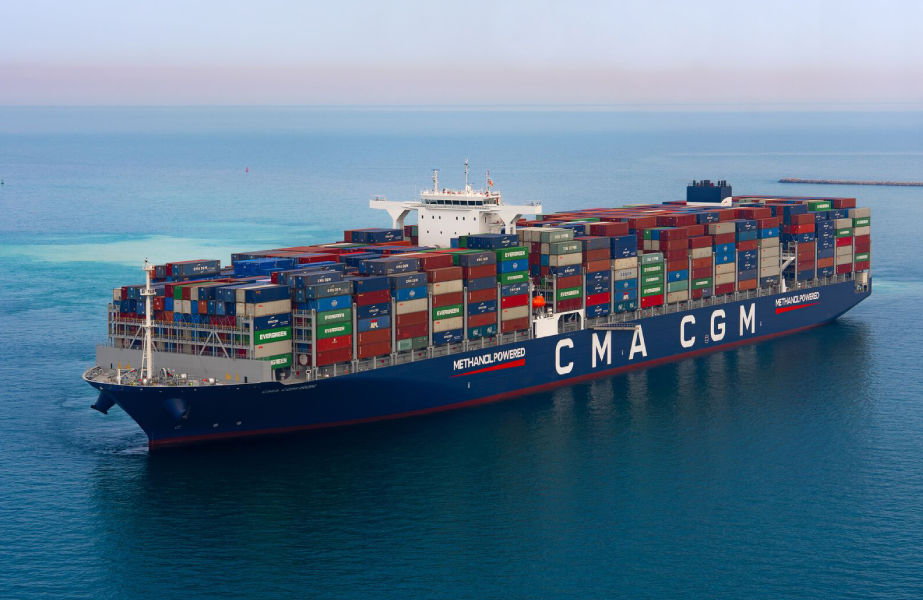
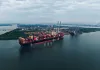
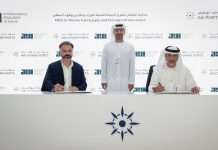
One of the Middle East region’s biggest ports and maritime logistics companies, AD Ports Group, is working with Masdar, Advario and the CMA CGM Group to explore the feasibility of developing an e-methanol bunkering and export facility at Khalifa Port and Khalifa Economic Zones Abu Dhabi (KEZAD). The project will provide the critical infrastructure needed to connect commercial e-methanol production with key customers in the global shipping industry, such as CMA CGM, to aid the decarbonisation of maritime transport.
Green hydrogen and its derivatives, such as e-methanol, are considered pivotal in decarbonising sectors like international shipping, helping drive the global shift toward net zero emissions. Many believe that e-methanol has the potential to revolutionise the maritime sector by offering a viable way to significantly cut emissions.
Christine Cabau Woehrel, Executive Vice President for Assets and Operations, CMA CGM Group, said: “We are accelerating the decarbonation of shipping by investing in low-carbon solutions, with a fleet of more than 153 vessels capable of using low-carbon energies and synthetic fuels such as e-methanol due to be operational by 2029. This collaboration marks a key milestone in developing the necessary infrastructure to scale up sustainable fuels, which are strategic for our industry’s energy transition.”
The new agreement follows a Memorandum of Understanding signed in 2023 between AD Ports Group and Masdar to explore the development of a green hydrogen hub within KEZAD. Last year, Masdar also signed a green fuel supply partnership with CMA CGM to assess the long-term provision of sustainable maritime fuels for the company’s fleet.
In another important recent development for AD Ports, the company announced the inauguration of the first phase of Tbilisi Intermodal Hub, Georgia’s first bonded container and intermodal terminal. AD Ports Group owns a 60% stake in Tbilisi Intermodal Hub, while the rest is held by Inveco, a local Georgian investment advisory firm, and Wilhelmsen Group.
The first phase of Tbilisi Intermodal Hub is Tbilisi Dry Port, an Inland Container Depot (ICD) designed for handling container cargo delivered by rail and truck. The Group and its partners plan to expand the facility significantly by early 2026 to add long-term warehousing, additional container yards and truck parking, and a fourth railway spur. This will transform it into an import-and-export logistics centre, servicing all of Central Asia, a fast-growing region that AD Ports Group is targeting as a key logistics growth corridor.
Also Read: MARSA LNG Bunkering Project Takes Important Step Forward