Print
Print
 PDF
PDF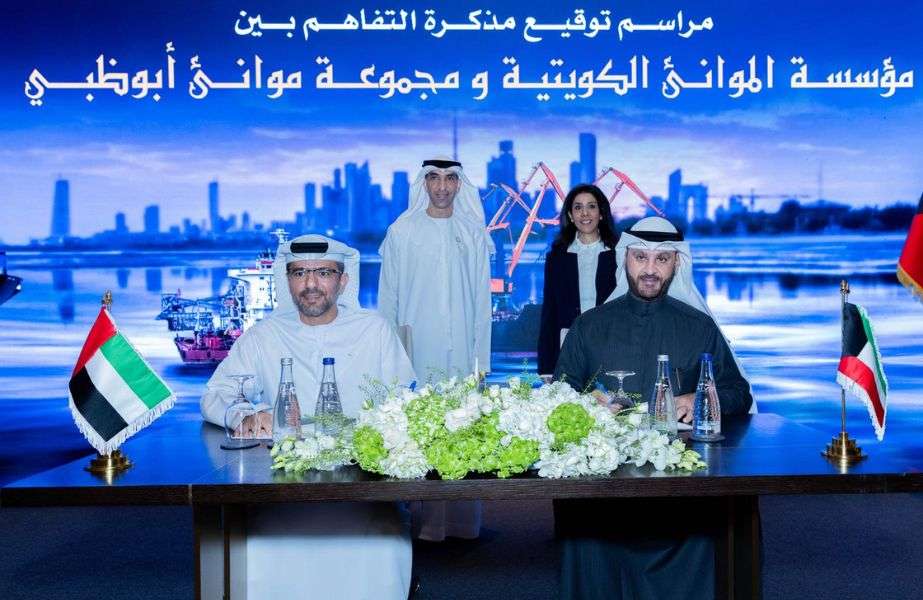
Major Investments Planned for Kuwaiti Ports Sector
Kuwait’s port infrastructure is set to be significantly strengthened over the coming years following the signing of two major agreements expected to attract substantial foreign direct investment into the ports and maritime sector. These developments underline Kuwait’s ambition to enhance its logistics capabilities and reinforce its position within regional and global trade networks.
In a key recent development, Abu Dhabi’s AD Ports Group signed a Memorandum of Understanding (MoU) with the Kuwait Ports Authority (KPA) to explore the development and operation of container terminal facilities at Shuaiba Port. Under the terms of the MoU, AD Ports Group will undertake comprehensive technical, environmental and financial feasibility studies, while also identifying the infrastructure requirements needed to support modern container operations. The KPA, for its part, will designate the project site at Shuaiba Port and work closely with AD Ports Group to complete the required studies, in addition to facilitating the acquisition of all necessary licences and approvals from relevant Kuwaiti authorities.
In another significant milestone for Kuwait’s ports sector, the Ministry of Public Works has signed an engineering, procurement and construction (EPC) contract with China Communications Construction Company (CCCC) for the first phase of the Mubarak Al-Kabeer Port project. The port is located on Boubyan Island in the northern Jahra Governorate and represents one of the country’s most ambitious maritime infrastructure developments.
Mubarak Al-Kabeer Port is central to Kuwait’s long-term strategy to establish itself as a regional trade and logistics hub while supporting broader economic diversification goals. The project is regarded as a flagship initiative under the government’s Kuwait Vision 2035 programme. While detailed specifications of the port remain limited at this stage, the initial investment associated with the agreement with CCCC is reported to be in the region of KD 1.2 billion, highlighting the scale and strategic importance of the development.