Print
Print
 PDF
PDF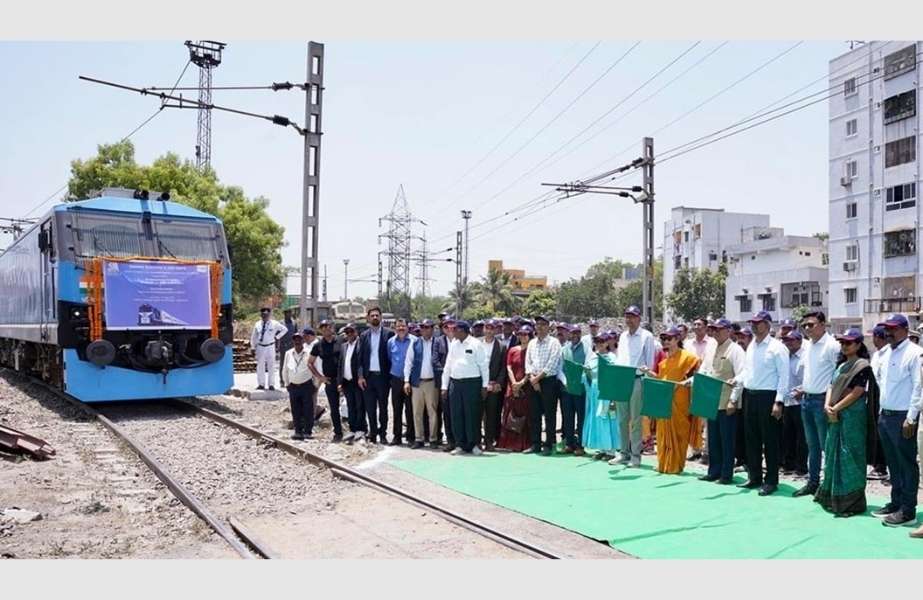
Maersk launches pharma reefer rail service with CONCOR
Maersk recently flagged off a dedicated weekly reefer rail service connecting Hyderabad’s pharmaceutical manufacturing cluster to Nhava Sheva Port. Developed in partnership with CONCOR (Container Corporation of India), the service addresses a long-standing industry need for a reliable and more environmentally friendly alternative to road transport for pharmaceutical cargo logistics.
The service is purpose-built for Hyderabad’s pharmaceutical exporters and operates on a fixed weekly schedule, transporting 40ft refrigerated containers, with pre-trip inspection (PTI) compliance and container selection built into every shipment. Several of the city’s leading pharmaceutical manufacturers are already using the service, with additional customers in active onboarding.
The Hyderabad–Nhava Sheva reefer rail corridor operates as a true end-to-end cold chain solution. Under a single-window arrangement, Maersk is assuming responsibility across inland rail and ocean freight, providing shipment visibility throughout the journey.
Maersk will also support pharmaceutical exporters with documentation, compliance assistance, cold-chain advisory engagement and, if required, last-mile trucking at the destination.
Thomas Theeuwes, Managing Director, Maersk South Asia, says, “India is central to Maersk’s global growth ambitions, and we are committed to building logistics infrastructure that meets the evolving needs of the Indian industry. The pharmaceutical sector demands that cargo be moved with precision, reliability, and accountability at every step of the supply chain. This rail service is our answer to that demand.”
Based on current volume projections, the shift from road to rail is estimated to reduce greenhouse gas emissions by about 3,000 tonnes over a one-year period. These savings are expected to increase as cargo volumes grow.
A spokesperson for CONCOR said: “Our collaboration with Maersk on this dedicated reefer rail corridor from Hyderabad reflects the confidence in rail as a reliable and efficient mode of transport for high-value, sensitive cargo. This is a significant step in strengthening India’s pharmaceutical export competitiveness, and we look forward to scaling this model further in partnership with industry.”