Print
Print
 PDF
PDF
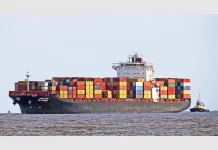
Following the fatal fire on the container vessel Maersk Honam in the Indian Ocean earlier this year, a thorough review of current safety practices and policies relating to the stowage of dangerous cargo has been undertaken by Maersk. As a result, the company has implemented a new set of guidelines to improve safety across its container vessel fleet.
The company evaluated over 3,000 United Nations (UN) numbers of hazardous materials in order to further understand and improve dangerous cargo stowage onboard its container vessels and subsequently developed a revised set of principles, called Risk Based Dangerous Goods Stowage. These new guidelines have now been implemented across more than 750 of the Danish company’s vessels. The principles have also been presented to the International Maritime Organization (IMO) as well as the Danish Maritime Authorities.
“All cargo aboard Maersk Honam was accepted as per the requirements of the International Maritime Dangerous Goods Code and stowed onboard the vessel accordingly. Despite this, as the fire originated in a cargo hold in front of the accommodation which held several containers with dangerous goods, it had an unbearably tragic outcome,” says Ole Graa Jakobsen, Head of Fleet Technology at Maersk.” This clearly showed us that the international regulations and practices with regards to dangerous goods stowage needs to be reviewed in order to optimally protect crew, cargo, environment and vessels.”
The Risk Based Dangerous Goods Stowage principles have been developed with the aim of minimising risk to crew, cargo, environment and vessel in case a fire develops. A number of different container vessel designs were reviewed from a risk mitigation perspective and ultimately six different risk zones defined.
Cargo covered under the International Maritime Dangerous Goods Code will no longer be stowed next to accommodation and main propulsion plant which is defined as the zone with the lowest risk tolerance. Similarly, risk tolerance will be low below deck and in the middle of the vessel, whereas the risk tolerance will be higher on deck fore and aft. Utilising statistics on container fires in the Cargo Incident Notification System (CINS), Maersk has now defined which UN numbers can be stored in each risk zone.
Maersk says it will continue to review its rules and policies for accepting dangerous goods and assess how to further improve them. Together with other members of the CINS, Maersk is seeking to channel these experiences into developing new industry best practice.
“Containership fires are a problem for our entire industry and we intend to share and discuss our learnings from this thorough review within relevant industry forums. We very much believe that discussions, views and insights among container carriers can further improve fire safety in our industry,” says Jakobsen.
On Tuesday 6th March 2018, crew on Maersk Honam reported a serious fire. They managed to release the vessels’ CO2 system into the cargo hold, but regrettably that did not stop the fire. Five crew members lost their lives in the course of the incident. Maersk says it is still awaiting the results of an investigation to establish the root cause of the fire in the cargo hold.