Print
Print
 PDF
PDF
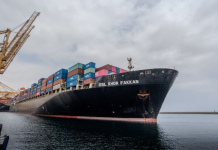
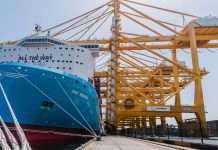
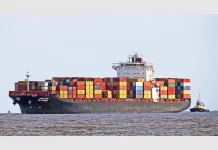
DP World’s Mundra container terminal has added a first direct service to the East Coast of the United States, enhancing north west India’s connectivity with the world’s biggest economy, with a first port call by Maersk Atlanta last month.
The MECL service connects Mundra with Houston, Norfolk, Newark, Port Tangier, Salalah, Jebel Ali, Charleston North and Savannah. This service is expected to enhance transit times, boost bilateral trade, drive economic growth, and encourage business collaboration within these regions. It will, DP World suggests, particularly benefit Indian industries such as handicrafts, ready-made garments, textiles, machinery components, pharmaceuticals and chemicals, which are in strong demand with the US East Coast region.
Commenting on this significant milestone, Ravinder Johal, Chief Operating Officer, Ports & Terminals, Operations & Commercial, Middle East, North Africa & Subcontinent, DP World, said, “The introduction of the MECL service marks a significant step forward, bolstering bilateral relations, improving direct trade connectivity, and driving economic growth for businesses across these regions”.
Also benefiting its Mundra operations, DP World and Reliance Industries have teamed up to launch a new logistics service for the petrochemicals industry, shifting product transport from road to rail, significantly cutting carbon emissions while enhancing operational efficiency.
The new solution connects Reliance Industries’ Jamnagar plant in Gujarat to DP World’s inland container depot (ICD) in Ahmedabad and onward to the port of Mundra. Previously, the Mundra-Jamnagar-Mundra round trip involved approximately 700km of road transport for each container. With the new solution, the Ahmedabad-Jamnagar-Mundra route, also approximately 700km, has been converted to rail. This transition eliminates the environmental and operational challenges associated with long-distance road transport while maintaining the same coverage.
The integrated rail service enables the transport of up to 1260 tonnes of cargo and consolidates up to 45 containers in a single movement, streamlining logistics and reducing the need for multiple trailers and drivers. This not only cuts down on transportation costs but also ensures seamless vessel connectivity for timely exports, DP World points out.