Print
Print
 PDF
PDF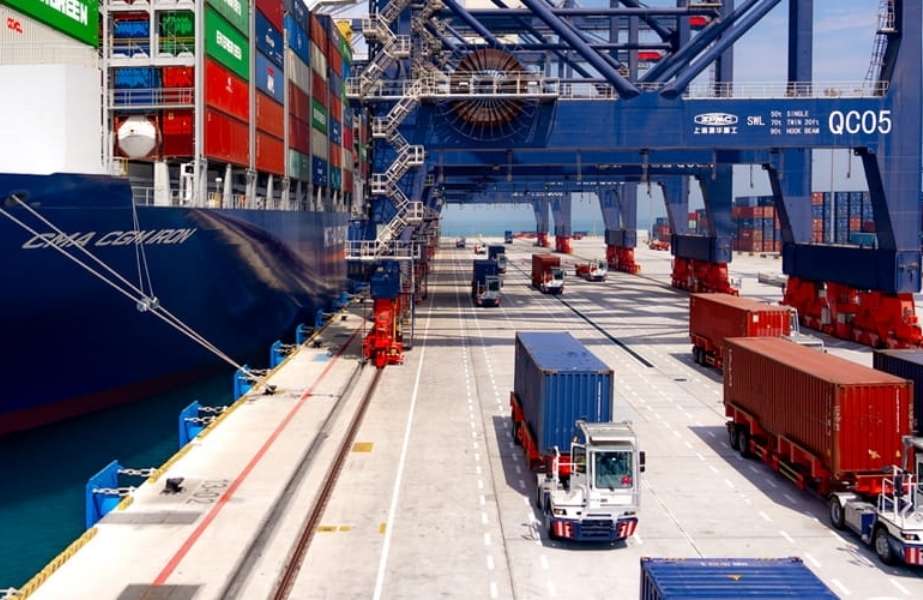
AD Ports leverages east coast ports to ease supply chain strain
Since the onset of recent regional developments at the end of February, AD Ports Group has continued to operate as normal, serving the needs of its clients by establishing alternative routes and rerouting cargo across land, rail, sea, and air to mitigate supply chain disruptions affecting Arabian Gulf ports.
To date, AD Ports Group has handled over 54,000 TEU at Fujairah Terminals and Khor Fakkan Port and has transported over 22,000 containers through its land logistics services, alongside 18,000 TEU across its regional short-sea maritime network, supported by a fleet of 24 vessels operating 8 feeder services. In addition, the Group has transported more than 8000 tonnes of cargo through its air logistics services, undertaken by more than 100 chartered flights.
Captain Mohamed Juma Al Shamisi, Managing Director and Group CEO of AD Ports Group, said: “Our long-term investments in a diversified and comprehensive network of logistics and trade infrastructure have enabled one of the UAE’s largest-ever logistics redeployments to be executed with speed, agility and efficiency. Under the guidance of our wise leadership in the UAE, AD Ports Group will continue to guarantee the flow of goods across local and regional markets, particularly essential commodities such as food, medicines, strategic reserves and other critical inputs.”
To ensure continuity of regular shipping services to Khalifa Port, and across three key trade corridors linking the UAE’s eastern ports with ports in the Arabian Sea and the Red Sea, the Group has launched several new regional feeder shipping services, redeploying vessels as necessary, and has plans to further increase its fleet capacity. Feeder shipping services operated by the Group’s SAFEEN Feeders and Global Feeder Shipping (GFS) have been rerouted via Fujairah Terminals and Khor Fakkan Port, both located on the Gulf of Oman, providing alternative gateways to the UAE and the wider GCC region. New container feeder shipping services have also been established connecting ports in India, Pakistan and Oman, as well as Red Sea ports, and ports along the Upper Arabian Gulf region.
The Group has, furthermore, established a land bridge to transport cargo from Fujairah and Khor Fakkan through bonded customs corridors in the UAE to Khalifa Port, Jebel Ali Port and Sharjah, using 800 trucks and four new daily rail service services by Etihad Rail. These efforts are supported by the Group’s expanded warehousing and storage capacity, which currently stands at more than 76,000 m2, which the company plans to more than double to 188,000 m2 oil the near future.