
Mr. Ramage joined IRI’s London office in March 2002 and was appointed Managing Director in January 2003. He was instrumental in the establishment of offices in Hamburg (2007), Roosendaal (2008), Mumbai (2008), and Dubai (2009) where he continues to have a management role. In 2009 Mr. Ramage accepted the title of Director, Worldwide Business Operations whereby he was responsible for IRI’s global network of offices. A resident of the
United Kingdom, Mr. Ramage was appointed Chief Operating Officer (COO) of IRI in April of 2011 and continues to be responsible for operations of all worldwide offices, including IRI’s headquarters in Washington, DC/Reston. Mr. Ramage has an extensive background at sea having sailed with BP Tankers, Mobil Shipping, and Maersk Line. He spent 14 years in the ship management industry, predominantly in Hong Kong with Denholm Ship Management and Eurasia Ship Management where he rose to Vice President, managing a fleet of 50 vessels. Mr. Ramage holds a Master Mariners Certificate and a Master of Business Administration from the University of Edinburgh as well as a Bachelor of Science Honours in Nautical Studies from Liverpool Polytechnic.
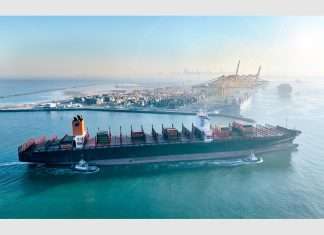
Jebel Ali port welcomes new Ge...
Jebel Ali port welcom...
Dubai’s Jebel Ali port has welcomed the first vessel to arrive as part of the newly established Gemi...
Dubai’s Jebel Ali port has welc...

Mundra terminal hits record
Mundra terminal hits ...
The Mundra International Container Terminal (MICT) achieved its highest ever throughput of 1.42 mill...
The Mundra International Containe...
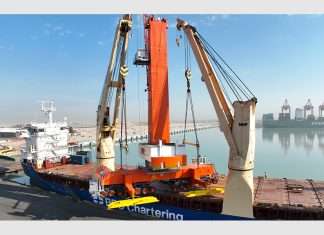
New crane for Basra Gateway
New crane for Basra G...
Basra Gateway Container Terminal (BGT) at the Port of Umm Qasr, Iraq, has commissioned a new Konecra...
Basra Gateway Container Terminal ...
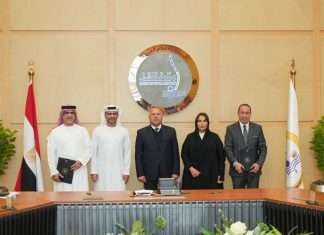
More international projects fo...
More international pr...
AD Ports Group has continued to enhance its international portfolio in the early weeks of 2025. Most...
AD Ports Group has continued to e...

Sohar celebrates strong 2024 p...
Sohar celebrates stro...
Sohar Port and Freezone recently celebrated a generally positive 2024 performance during its annual ...
Sohar Port and Freezone recently ...
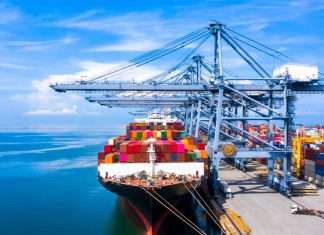
Strong overall cargo growth at...
Strong overall cargo ...
The Saudi Ports Authority (Mawani) achieved slightly mixed results in 2024, with strong growth in so...
The Saudi Ports Authority (Mawani...
Record breaking performance at...
Record breaking perfo...
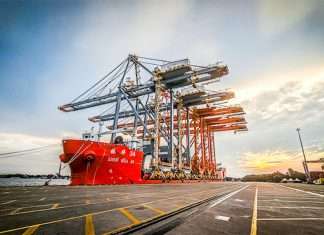
An impressive growth rate of 17% was achieved last year at the International Container Transshipment...
An impressive growth rate of 17% ...

HMM signs up to Vadhavan port
HMM signs up to Vadha...
The South Korean shipping company HMM has signed a Memorandum of Understanding (MOU) with the Jawaha...
The South Korean shipping company...
AD Ports reflects on a year of...
AD Ports reflects on ...
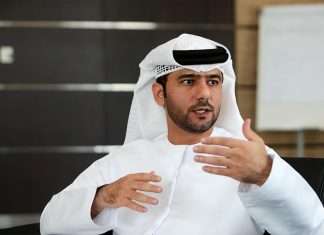
Abu Dhabi-based AD Ports Group has reflected on a period of “unprecedented global expansion and stra...
Abu Dhabi-based AD Ports Group ha...
DP World hits capacity milesto...
DP World hits capacit...
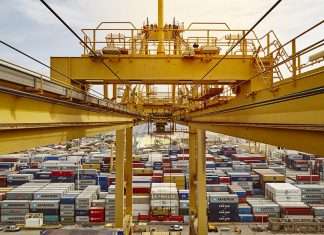
Dubai-based DP World has achieved a key milestone, surpassing 100 million TEU of container handling ...
Dubai-based DP World has achieved...
SCCT maintains strong growth l...
SCCT maintains strong...
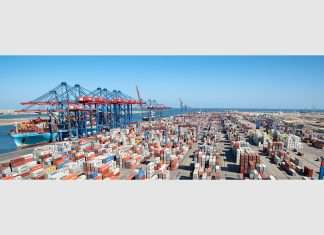
In the face of challenging geopolitical and macroeconomic factors, the Suez Canal Container Terminal...
In the face of challenging geopol...
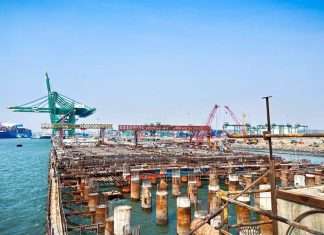
PSA Mumbai consolidates leadin...
PSA Mumbai consolidat...
PSA Mumbai handled 2.12 million TEU in 2024, with over 1000 container vessels visiting the facility....
PSA Mumbai handled 2.12 million T...
Frequently Asked Questions
Maritime terminals are designated facilities at ports where cargo is loaded, unloaded, stored and transferred between ships and land-based transport. They handle containers, bulk goods, vehicles and other freight. Terminals are crucial to global shipping because they serve as the hubs that connect sea routes with rail and road networks, ensuring efficient movement of goods across supply chains.
Container terminals specialise in handling standardized shipping containers using cranes, automated systems and specialised yards. Bulk cargo terminals, on the other hand, manage loose goods such as coal, grain, ores and liquids (like oil or chemicals) using conveyors, pumps and specialised storage. Each type of terminal is designed to optimise the flow, safety and storage of specific cargo types.
Port terminal efficiency directly affects how quickly cargo is processed, which in turn influences delivery schedules, logistics costs and overall supply-chain reliability. Efficient terminals minimise vessel turnaround time, reduce congestion, improve freight rates, and support better planning for importers, exporters and freight operators.
Modern maritime terminals are increasingly using digital technologies such as automation, IoT sensors, AI-powered scheduling systems, real-time tracking, automated gates and smart cargo handling equipment. These innovations help terminals reduce bottlenecks, improve safety, speed up cargo movement and increase throughput capacity.
You can find the latest news and updates on terminal developments, port performance and operational insights on The Maritime Standard’s Terminals category page. It features verified industry reports, expert analysis, official announcements from port authorities, and insights into infrastructure projects shaping terminals worldwide.