Print
 PDF

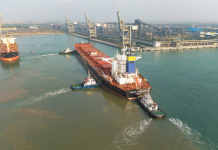
A new agri bulk terminal has been opened in the Port of Salalah as part of an ongoing business diversification programme aimed at reducing the port’s dependency on container transhipment activity. The new facility has been developed by Arabian Sea Port Services, a joint venture between Algeposa of Spain, Oasis Development and Al Thabat Holding.
The recently commissioned first phase of the project covers an area of 25,000 m2, and includes 60,000 tonnes storage capacity for bulk grains and handling equipment capable of handling 15,000 MT of grain per day. The facility also provides customers a range of value added services, including quality control, pest control and bagging.
A second phase of development for the agri-bulk terminal is already at the planning phase. This will double the capacity of the facility, allowing it to handle around 500,000 MT of bulk cargoes a year.
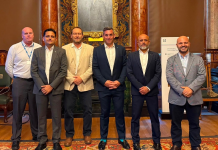
Port of Salalah chief executive, Andrew Dawes, says, “The new facility allows the port to not only provide enhanced services to our existing customers but also helps attract new customers who have shown interest in using Salalah as the hub for the region. We believe that the expertise of Algeposa combined with the capabilities of Port of Salalah will provide a superior customer experience and result in more companies using Salalah as their hub for food and agricultural commodities in the future.”
Algeposa has invested around US$ 12.5 million in the Salalah agri bulk facility, making it one of its biggest projects outside of Europe. Iker Elicegui, country manager, added “The proximity of Salalah to all major consumption centres in the Middle East and Africa, combined with good connectivity, allows our customers to have a reliable and cost efficient supply chain. The first phase of the facility is already attracting huge interest from many of our global customers who are looking at locating their operations in the region.”
Algeposa also sees significant potential for the facility to act as a catalyst for downstream industries in food processing, packaging and labelling, for example, within the Salalah hinterland.