Print
 PDF
The Maritime Standard Tanker Conference 2026 concludes with focus on market shifts, energy transition and resilience
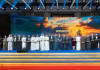
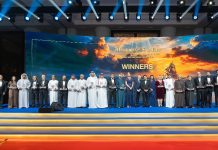
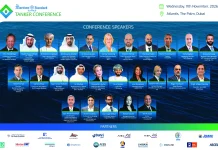
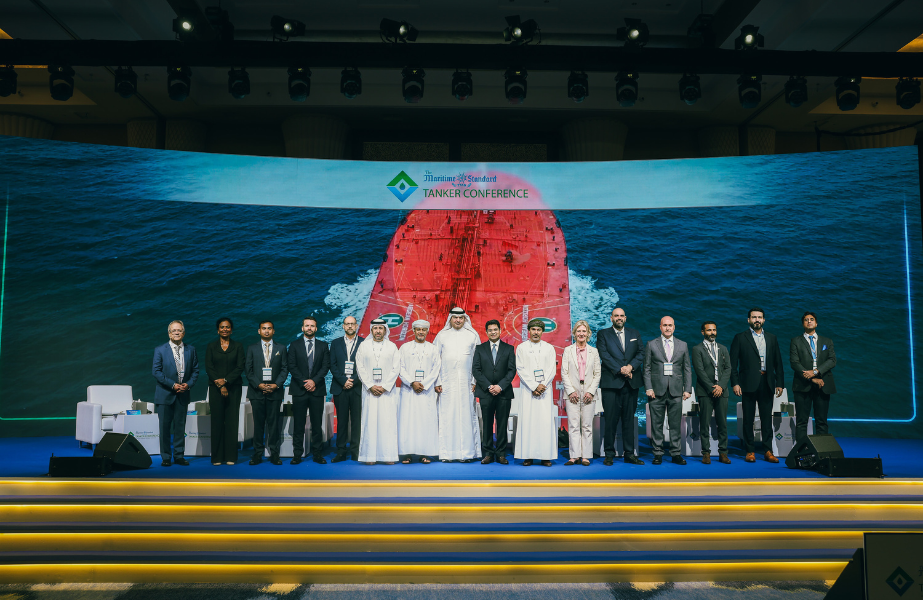
The Maritime Standard Tanker Conference 2026 concluded successfully at Atlantis, The Palm, Dubai, on 11 November, bringing together senior maritime executives, shipping professionals and industry specialists to examine the challenges and opportunities shaping global tanker shipping.
Held under the theme Navigating the Next Wave: Market Rebalancing, Energy Transition, and Operational Resilience in Tanker Shipping, the conference explored developments across crude, product, chemical and gas tanker markets. Discussions covered geopolitical uncertainty, shifting trade patterns, fleet investment, regulatory pressures, maritime security and technological innovation.
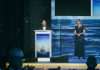
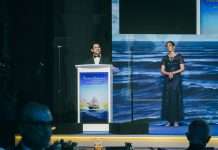
Opening the conference, Clive Woodbridge, Conference Chairman and Editor of The Maritime Standard, highlighted the importance of industry collaboration in assessing market developments and the future direction of tanker shipping. He addressed commercial and security challenges, the growing influence of digitalisation and artificial intelligence, and the implications of net zero regulations and emerging technologies for maritime operations.
Delivering the keynote address, Dr Ibrahim Al Nadhairi, CEO of Asyad Shipping, emphasised shipping’s strategic role in global energy security, economic resilience and stability. He noted that the reliability of the regional shipping industry directly affects global energy supplies, making the protection of maritime trade a shared international responsibility. He called for resilience to be built into the maritime system before crises occur, highlighting the need for international collaboration, fleet renewal, infrastructure investment and operational efficiency. He also underlined the importance of national shipping capabilities in maintaining essential trade during periods of disruption.
The first session, titled Market Rebalancing and Strategic Positioning in a Changing Landscape, was moderated by Clive Woodbridge. It examined changing tanker market conditions, commercial strategies, fleet investment and the impact of geopolitical developments on global trade flows.
Dr Ahmed Al Abri, CEO of ASRY, highlighted how the company is using market uncertainty as an opportunity to diversify beyond traditional ship repair. He outlined new ventures in marine services, ship recycling, terminal operations and energy services, noting that its onshore services venture has generated approximately 4.5 million in business. He also discussed plans to develop ship recycling capacity and expand into shipbuilding through partnerships.
Catrine Vestereng, SVP and Business Director for Tanker at DNV, examined fleet renewal challenges amid an ageing global fleet, high newbuilding costs and uncertainty over future fuels and regulations. She highlighted the importance of efficiency, operational performance and fuel flexibility in investment decisions.
The session also featured perspectives on commercial strategy, market developments and fleet investment from Ahmed Al Dhaheri, Senior Vice President, Commercial (Shipping) at ADNOC Logistics & Services; Friedrich Portner, CCO–Maritime at AD Ports Group; and Theo Kourmpelis, Global Business Director for Tankers at Lloyd’s Register. Tony Dagher, Managing Director of TMC Shipping, explored entrepreneurial thinking and commercial flexibility, while James Kennedy, Regional Sales Manager GCC at Advanced Polymer Coatings, Inc., examined advances in cargo tank coating technology. Navin Kumar, Director, Maritime Research, Bulk Shipping at Drewry, and Dereck Wate, CEO of Gulf Energy Maritime, also contributed perspectives on tanker fleet dynamics and the industry’s changing commercial landscape.
The second session, Operational Resilience and Innovation in the Energy Transition Era, was moderated by Navin Kumar. Discussions focused on operational performance, maritime security, fuel supply, digital connectivity, regulatory compliance and the practical challenges of adapting to the energy transition.
Katherine Yakunchenkova, General Manager of Al Safina Security Services Ltd, examined how intelligence supports maritime security and risk management across global energy supply chains. She highlighted the use of AIS data, incident reports and open-source intelligence to identify threats, assess vessel exposure and inform routing and security decisions.
The session also featured Capt Anwar Buftain, Manager, Fleet Personnel Group at Kuwait Oil Tanker Company; Ali Shehab, Global Director of Special Projects and Services at DNV Maritime; Alessandra Burke, CEO of K2 Bunker Supply LLC; Ali Al Shibani, Chairman of O Bunkering; June Manoharan, Managing Director of LENOL FZCO; and Roger Harfouch, Sales Director at Marlink Communications.
Other speakers included Capt Vikas Pandey, Founder and CEO of ShipFinex; Capt Amarjit Kauchhur, Vice President (Middle East) and Regional Director of International Registries, Inc.; Mehtab Kassam, Managing Associate at Stephenson Harwood; Ravi P. Jawani, Partner at Fichte & Co Legal Consultancy; Nivesh Chaudhary, Co-Founder and Managing Director of ASCELA; and Capt Gagan Dhillon, CEO (Dubai) of West of England P&I Club.
The conference provided a platform for industry professionals to exchange perspectives on the commercial, operational and strategic issues influencing tanker shipping. Discussions highlighted the importance of adaptable business models, stronger cooperation, investment in technology and infrastructure, and a continued focus on safety and efficiency as the industry responds to a changing global environment.