Print
Print
 PDF
PDF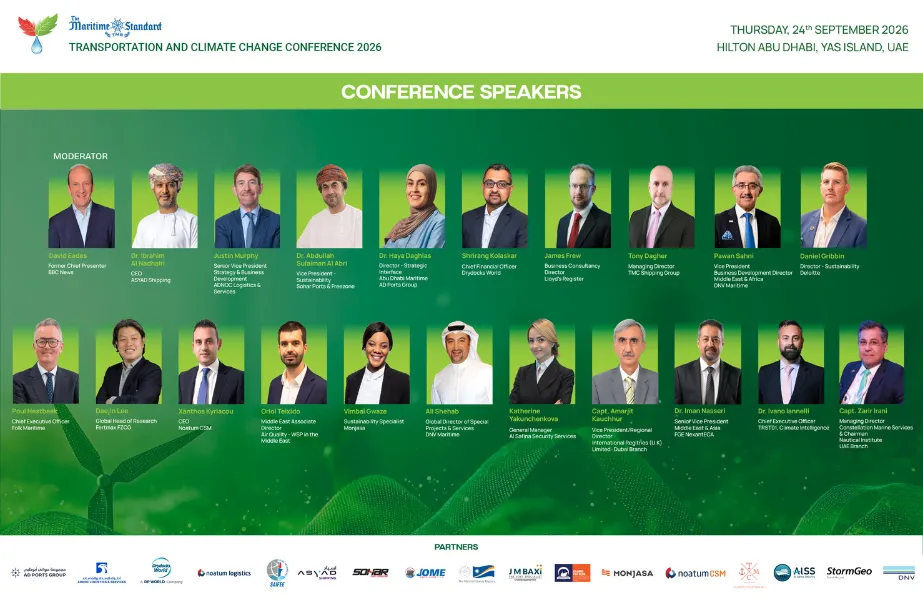
TMS TACCC 2026 to address next phase of transport decarbonisation
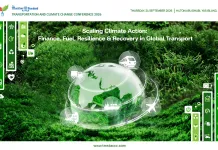
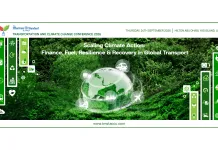
The fourth edition of The Maritime Standard Transportation & Climate Change Conference (TMS TACCC) will take place on Thursday, 24th September 2026, at the Hilton Yas Island, Abu Dhabi, bringing together senior maritime and transport leaders, sustainability specialists, policymakers, technology experts and industry stakeholders to examine the challenges and opportunities shaping the next phase of global transport decarbonisation.
Held under the theme “Scaling Climate Action: Finance, Fuel, Resilience & Recovery in Global Transport,” TMS TACCC 2026 will focus on the practical realities of delivering climate action at a time when the transport industry is navigating evolving regulations, significant investment requirements, changing energy markets, geopolitical uncertainty and the need to strengthen operational resilience.
The conference will feature two key sessions, moderated by David Eades, Former Chief Presenter, BBC News. Bringing together senior industry practitioners and specialists from across the maritime, energy, logistics, finance, technology and sustainability sectors, the programme will examine how the industry can turn climate ambitions into commercially viable and operationally practical solutions.
The first session, “Delivering Net-Zero Maritime: Regulation, Markets & Investment Readiness,” will focus on the financial, regulatory and strategic dimensions of maritime decarbonisation. With new environmental requirements reshaping investment decisions and fleet strategies, the session will explore how companies can prepare for the transition while balancing commercial priorities, operational requirements and long-term sustainability objectives.
Confirmed speakers for the session include Dr. Ibrahim Al Nadhairi, CEO, Asyad Shipping; Justin Murphy, Senior Vice President, Strategy and Business Development, ADNOC Logistics & Services; Dr. Abdullah Sulaiman Al-Abri, Vice President – Sustainability, Sohar Ports & Freezone; Dr Haya Daghlas, Director Strategy & Regulations, Abu Dhabi Maritime; Shrirang Kolaskar, Senior Vice President – Finance, Drydocks World; James Frew, Business Consultancy Director, Lloyd’s Register; Tony Dagher, Managing Director, TMC Shipping; Shahda Al Taie, Director, Sustainability Solutions Advisory, KPMG Middle East; Pawan Sahni, Vice President, Business Development Director Middle East and Africa, DNV Maritime; and Daniel Gribbin, Director – Sustainability, Deloitte.
The discussion will address the growing cost and complexity of the transition, including investment in fleet renewal and retrofits, alternative fuel adoption, carbon markets, sustainable finance and regulatory compliance. It will also consider how shipowners, operators, ports and other stakeholders can assess investment readiness and build strategies that remain resilient amid changing market and geopolitical conditions.
The second session, “Technology & Infrastructure: Scaling Decarbonized Transport Ecosystems,” will examine the technologies, infrastructure and operational capabilities required to support a more efficient and resilient transport sector. As digital tools and data become increasingly important to decision-making, the session will explore how technology can help companies improve efficiency, transparency, safety and environmental performance.
Confirmed speakers include Poul Hestbæk, Chief Executive Officer, Folk Maritime; Daejin Lee, Global Head of Research, Fertmax FZCO; Xanthos Kyriacou, CEO, Noatum CSM; Oriol Teixidó, Middle East Associate Director – Air Quality, WSP in the Middle East; Vimbai Gwaze, Sustainability Specialist, Monjasa; Ali Shehab, Global Director of Special Projects and Services, DNV Maritime; Katherine Yakunchenkova, General Manager, Al Safina Security Services Ltd; Capt. Amarjit Kauchhur, Vice President, Middle East/Regional Director, International Registries (U.K.) Limited – Dubai Branch; Dr. Ivano Iannelli, Chief Executive Officer, TRST01; and Shailesh Bhala, Chief Operating Officer, Best Oasis, DMCC.
Topics will include digitalisation, freight analytics, predictive intelligence, environmental data, connectivity, fuel traceability, carbon accounting and ESG transparency. The session will also explore the role of technology in strengthening maritime security, regulatory compliance and operational resilience, while supporting the development of more sustainable transport ecosystems.
Together, the two sessions will address the closely connected challenges of finance, regulation, fuel, technology and resilience that will determine the pace and effectiveness of the global transport transition. The discussions will place particular emphasis on practical implementation, recognising that achieving long-term climate objectives will require investment, innovation and collaboration across the entire transport value chain.
TMS TACCC 2026 comes at an important juncture for the maritime and wider transport industries. As companies face growing pressure to reduce emissions while maintaining competitiveness, reliability and energy security, the conference will provide a platform for informed discussion on how ambitious sustainability goals can be translated into realistic business and operational strategies.
The conference will bring together decision-makers and experts from shipping, ports, logistics, energy, finance, technology and sustainability to exchange knowledge, explore emerging solutions and identify opportunities for collaboration. Through its discussions, TMS TACCC 2026 aims to contribute to a more practical understanding of how the transport industry can scale climate action while building greater resilience for the future.
For more information about the conference programme, confirmed speakers and registration, please visit https://tmstaccc.com/.