Print
Print
 PDF
PDF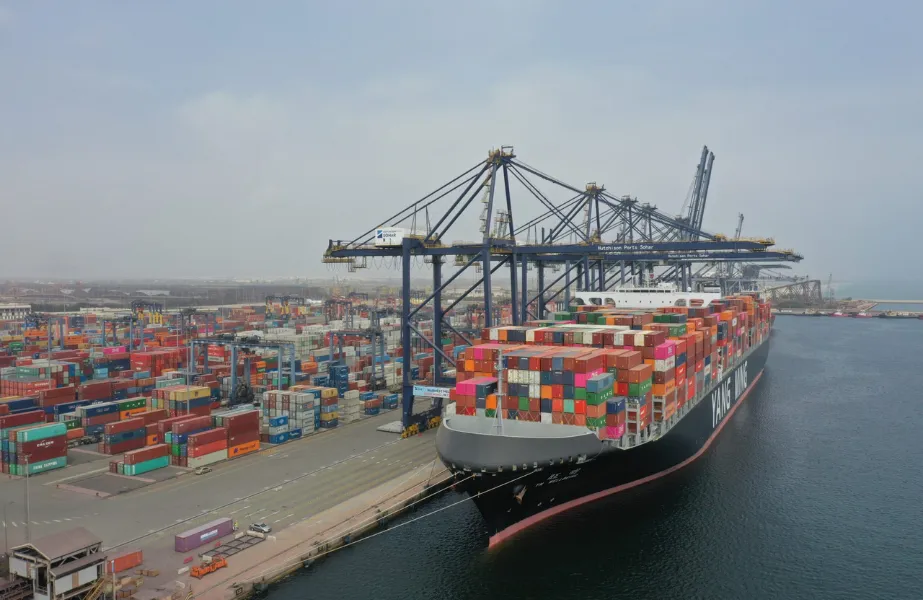
Cargo volumes rise at Oman’s Salalah and Sohar ports
The first half of 2026 was a positive one for the Omani ports of Salalah and Sohar, which have both benefitted from regional trends as cargo operations shift to locations outside of the Gulf.
Over the six-month period both container and general cargo volumes increased significantly at Salalah compared with the equivalent months in 2025. The Salalah Container Terminal handled 2.33 million TEU, up from 2.03 million TEU in the corresponding period of last year, an increase of 15%, while the port’s General Cargo Terminal handled 14.04 million tonnes for the period ending June 2026, compared to 12.91 million tonnes in the same months of last year, a growth rate of 9%. This was mainly the result of increased dry bulk throughput.
Demand for container and general cargo handling services is expected to remain strong at Salalah port over the next three months. In particular the Gemini container shipping consortium is expected to provide greater stability with regard to transshipment volumes in this period.
While uncertainty surrounding the Strait of Hormuz continues, Salalah is well positioned to capitalise on potential cargo diversions as shipping lines seek alternative routing options. Such developments are expected to strengthen the port’s role as a key regional transshipment hub.
According to Braik Musallam Al Amri, Chairman, “The container shipping market in the Middle East continues to experience significant volatility due to escalating regional conflicts. Through close collaboration with key stakeholders, the Port of Salalah remains focused on maintaining operational resilience, optimising cargo flows and responding proactively to evolving market conditions.”
Meanwhile, the Port of Sohar delivered an even more impressive operational performance during the first half of 2026, recording total cargo throughput of 52 million tonnes, a 52% increase compared with the same period last year, with ship-to-ship operations accounting for around 24 million tonnes of this traffic. Container throughput increased by 40% to 545,000 TEU, primarily driven by higher transshipment activity, while breakbulk cargo traffic nearly doubled to 1.24 million tonnes. Dry bulk volumes, however, were down, from around 17.6 million tonnes in the first half of 2025, to 11.69 million tonnes over the first six months of 2026.
Emile Hoogsteden, CEO of Sohar Port, said: “As trade continues to evolve, we remain committed to investing in world-class infrastructure, strengthening maritime connectivity, and enhancing operational excellence to ensure Sohar continues to create long-term value for customers, partners, and the wider economy. These investments ensure Sohar remains well positioned for future growth while reinforcing Oman‘s position as a logistics and industrial hub.”
Sohar Freezone also maintained a positive momentum during the first half of 2026. Five new investment contracts, valued at OMR 226.47 million, were signed during the period and leased warehouse space reached approximately 37,000 m2, up 19% year-on-year, reflecting continued demand for industrial and logistics facilities within the Freezone.
Also Read: Container Volumes Increase At Salalah Port