Print
Print
 PDF
PDF
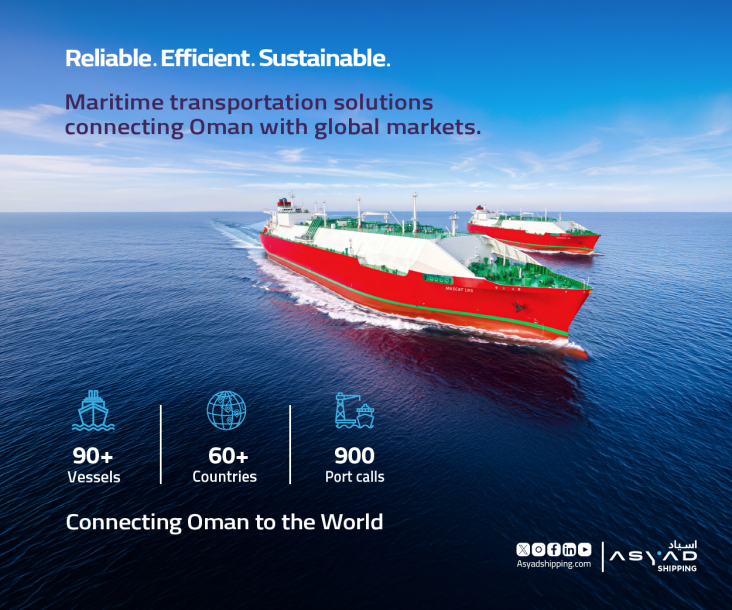
Muscat-based Asyad, the state-owned integrated logistics group, has posted a 28% increase in profits in 2018 and says it expects to continue this positive trend in the year ahead. According to statement: “These results reflect the strength and resilience of the group and its ability to achieve sustained growth despite the difficult shipping market, high fuel prices and the prevailing economic climate.”
A number of group subsidiaries achieved exceptionally good results in challenging market conditions. Oman Shipping Company recorded an 18% increase in net profits despite a significant and unexpected drop in global freight rates, coupled with higher fuel prices. Furthermore, Oman Drydock Company achieved its best financial performance since the yard’s inception, with profitability rising 55% in 2018 compared to the year before.
Asyad controls all the leading Omani ports, which collectively witnessed a 33% increase in general cargo handling last year. Salalah achieved a 25% increase in general cargo handling despite challenges faced by the port as a result of Cyclone Mikono and the port’s ability to recover from the impact of the storm damage. Container import and export volumes moving through the port rose by 22% and 12% respectively, although transshipment volumes were down, as a result of the impact of the cyclone. The port of Sohar achieved ‘remarkable’ growth in general cargo handling, up 53% compared with 2017, while cargo imports at Duqm were 38% higher, with around 410 vessels calling at the fledgling port.
The new Marafi division, founded by the group last year, made a profit in its first year of operations. During 2018 Marafi took over operations at Sultan Qaboos Port in Muscat and started developing a new bulk terminal in Sohar.
In addition, Asyad notes the success of the Free Zones in Sohar and Salalah in attracting investment projects. The Asyad statement says:”The growth witnessed in Omani Ports and Free Zones has contributed significantly to increasing trade volume in the Sultanate and placing Oman on the world trade map as an important trading and logistics center in the region.”