Print
Print
 PDF
PDF
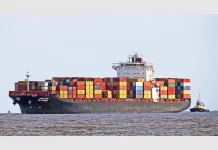
Towards the end of September the 3500 teu containership Venta Maersk called at the port of Saint Petersburg having successfully completed a trial passage of the Northern Sea Route. This is widely seen as offering a potential long term alternative to using the Suez Canal for Far East to Europe trades and if developed could have a major impact on container shipping activities and ports in the Middle East.
The ice class Venta Maersk, one of Maersk’s Baltic feeders, started its voyage in the port of Vladivostok, Russia. The route included further stops at terminals in Vostochny and Busan, before passing through the Bering Strait on its way to Bremerhaven.
Palle Laursen, chief technical officer at Maersk, says, “The trial allowed us to gain exceptional operational experience, test vessel systems, crew capabilities and the functionality of the shore based support setup. The voyage went according to plan and without specific incidents.”
Venta Maersk and all systems aboard are reported to have performed well in the unfamiliar environment. While the passage is feasible around this time of the year and is marked by a lack of obstructive ice, ice conditions in the East Siberian Sea required assistance by icebreakers, Maersk points out.
Maersk stresses that this was a one-off trial designed to gain operational experience in a new area and to test vessel systems. “Currently, we do not see the Northern Sea Route as a viable commercial alternative to existing east-west routes,” says PalleLaursen. Today, passage on the route is only feasible for around three months a year, but some experts believe that may change with time.